Pause carousel
Play carousel

An Abertay University student has helped a local sustainable engineering company better understand the carbon impact of its operations through a real-world industry research project.
Emir Tashbaev, who is studying MSc Geotechnical Engineering, worked with leading ground screw and screw piling company RADIX on a Master’s project exploring how the company could better measure the environmental impact of screw pile foundation systems compared with traditional concrete foundations.
Emir developed a practical carbon calculator capable of assessing the whole-life embodied carbon (WLEC) of different foundation solutions. The calculator considers key factors across the lifecycle of a foundation system, including material production, transportation, installation and end-of-life.
Importantly, the tool was tested using two real-world projects, including a battery energy storage development in North Yorkshire. In both cases, Emir’s research found that RADIX screw pile systems had a lower overall carbon impact than equivalent concrete foundation solutions.
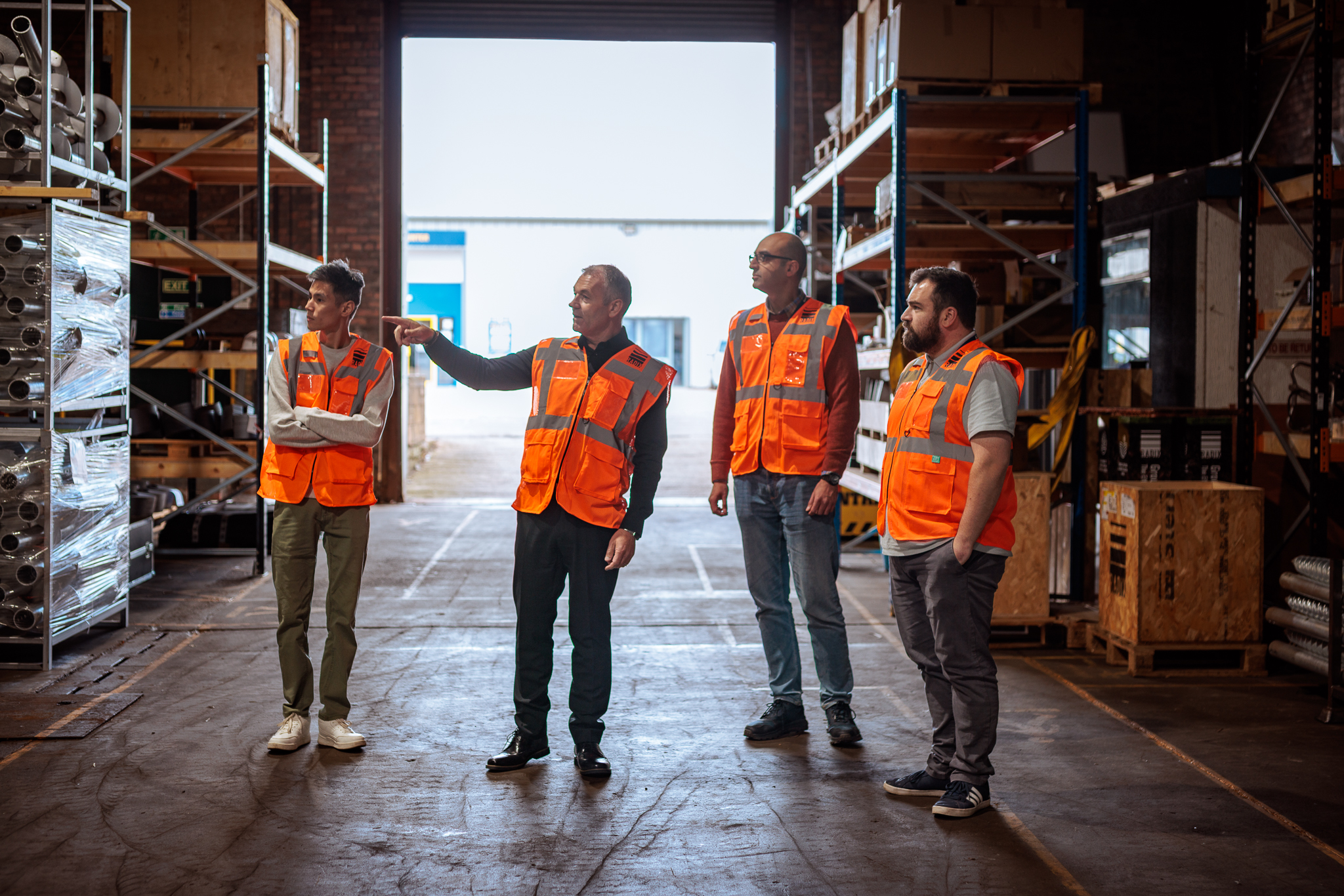
The findings support RADIX’s wider commitment to developing and delivering lower-carbon alternatives to traditional foundation methods, while providing the business with a practical tool to quantify and compare the environmental impact of different solutions on future projects.
Originally from Kyrgyzstan, Emir had never visited Scotland before beginning his studies at Abertay. Now due to graduate in November, he has rounded off his degree by applying his technical knowledge to a live industry challenge in Dundee.
Emir said:
Working with RADIX gave me opportunity to apply my geotechnical engineering knowledge to a real industry challenge. It was particularly interesting to see how sustainability can be considered alongside the technical aspects of foundation design. Developing the calculator was a valuable experience and I’m pleased that the project could provide RADIX with a practical tool to assess the whole-life embodied carbon of its foundation system.
RADIX designs, manufactures and installs ground screw and screw pile foundation systems, providing alternatives to traditional concrete foundations across a growing range of sectors and applications.
Founded by Callum Milne in 2019 and headquartered at Dryburgh Industrial Estate in Dundee, RADIX has grown rapidly and now employs 22 people across its Dundee headquarters and operational hub in Chelmsford, with turnover exceeding £9 million.
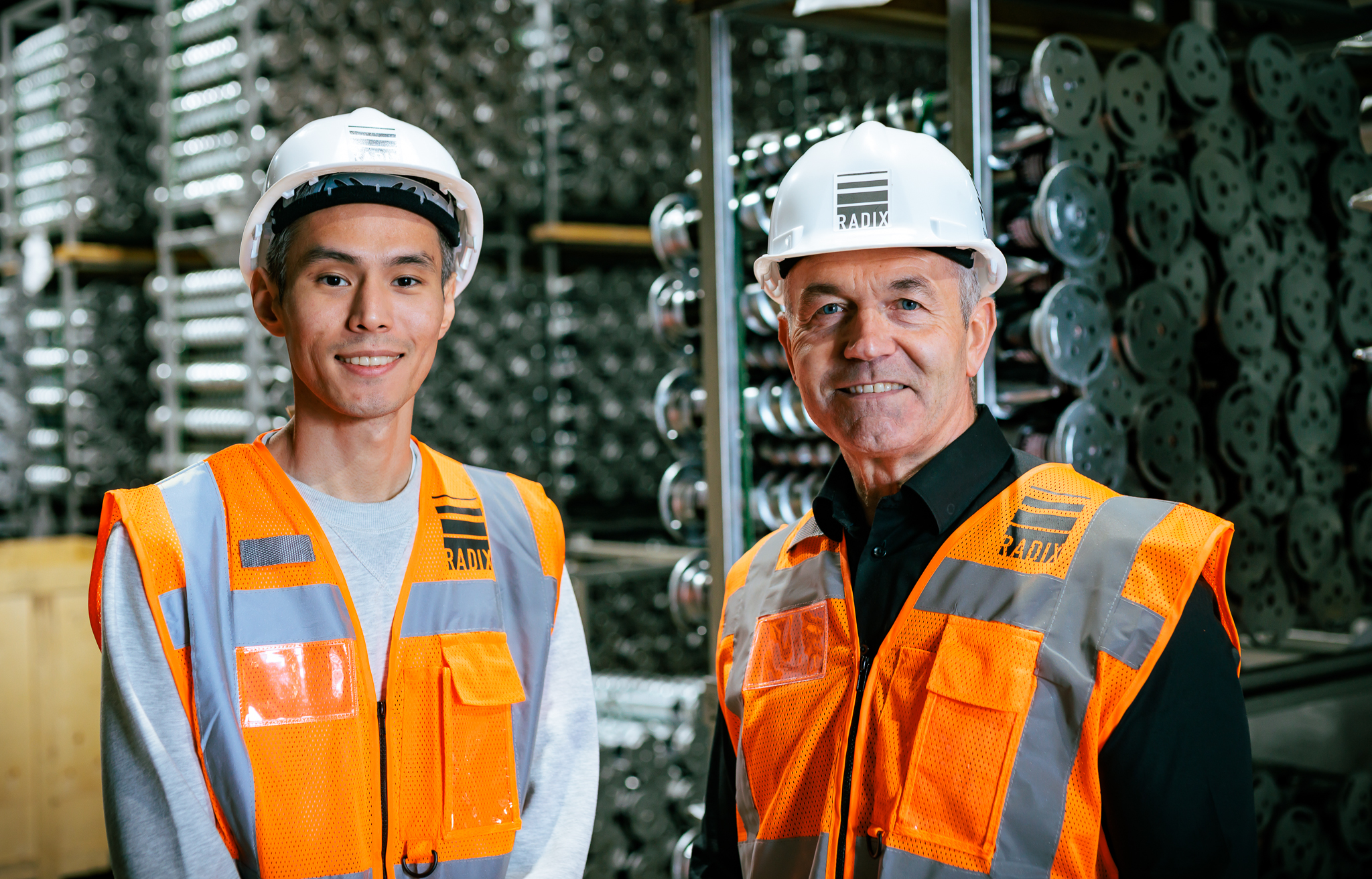
Callum Milne, Managing Director of RADIX, said:
As a business, one of our key goals is to provide lower-carbon alternatives to traditional foundation systems, so being able to accurately measure and demonstrate the environmental impact of our solutions is hugely valuable. Emir’s work has given us a practical tool that we can use to compare our systems with conventional foundations and better understand the carbon savings that can be achieved across different projects. The project is also a great example of what can be achieved when industry and academia work together. We’re pleased to have been able to give Emir the opportunity to apply his expertise to a live challenge within our business, while creating something that can have genuine practical value for RADIX and our customers.
The industrial research project reflects the practical focus of Abertay’s MSc Geotechnical Engineering programme, which connects advanced technical learning with challenges facing the engineering sector. Students explore areas ranging from foundation design for offshore wind developments to sustainable ground engineering solutions.
Launched in the 2025/26 academic year, the programme is now accepting applications for its next intake.
Dr Andrew Minto, Lecturer in Civil Engineering, said:
We’re delighted that Emir’s work has given RADIX a practical tool to help measure and compare the carbon impact of its foundation systems. This is exactly the kind of real-world challenge we want our students to tackle as part of the MSc Geotechnical Engineering programme. Working directly with industry gives students the opportunity to apply what they have learned, develop their professional skills and produce work that can make a genuine difference to an organisation.
Following the success of the project, RADIX and Abertay University are now exploring opportunities to build on the collaboration, including a potential undergraduate project and the possibility of developing the relationship into a full Knowledge Transfer Partnership.


